
Online Organizational Psychology Degree
Bachelor of Science in Organizational Psychology
Did you know there’s a place in the business world for the study of human behavior? The study and application of psychological concepts and theories in the workplace can help organizations run more effectively and support efforts to improve employee performance. An online organizational psychology degree from CTU can help you prepare to examine workplace issues that affect individuals, groups, and organizations. This degree program can also help you work to develop analytical, interpersonal, and leadership skills as you explore the psychology of work, including developing talent, coaching and mentoring, change management, supporting employee wellness, and fostering personal growth.
182
Program Credits
5 Weeks
Course Length
Online
Location
Estimate your costs, potential savings and graduation date.
Program Overview
Effective October 6, 2026 the Bachelor of Science in Psychology with a concentration in Organizational Behavior is now known as the Bachelor of Science in Organizational Psychology.
The Bachelor of Science in Organizational Psychology (BSOP) is a 182-credit-hour program that includes 66 credit hours of general education, 108 credit hours focused on the organizational psychology core, and 8 credit hours of electives. This program is only offered online.
This program is designed to provide students with real-world application of psychological concepts and theories.
Students have the opportunity to develop analytical, interpersonal, and leadership skills. Students will have the opportunity to examine workplace issues that impact individuals, groups, and organizations. The psychology of organizational behavior examines topics such as developing human talent and resources, consulting, coaching and mentoring, creating learning organizations, dealing with change, promoting organizational improvements, and fostering personal growth and professional success.
This program does not lead to additional licensure or certification. As such, CTU has made no determination regarding prerequisites for licensure or certification in any state or jurisdiction.
The College of General Education and Psychology builds the educational foundation that empowers students with competence plus confidence for academic, professional, and personal success. Our comprehensive General Education program encompasses technology fluency, professional presence, problem-solving, writing, information literacy, and cultural competence, helping students prepare for lifelong learning, responsible leadership, and academic success in an ever-changing world.
Building on this foundation, the College's Psychology programs cultivate a deeper understanding of human behavior and help graduates prepare to apply evidence-based principles to the complex challenges facing individuals, organizations, and society. Guided by experienced faculty, innovative teaching, and real-world application, the College empowers graduates to apply their knowledge, skills, and understanding with competence and confidence to make meaningful contributions in their professions, organizations, and communities.
For the 9th consecutive year, CTU's Online Bachelor's degree programs are ranked among the Best Online by U.S. News & World Report.*
* CTU programs are ranked among U.S. News & World Report’s 2023 Best Online Programs.


Estimate your costs, potential savings and graduation date
Get an estimate of your degree program costs and graduation date in as little as five minutes.
Courses
| Courses Core | Credits | |
|---|---|---|
| BHVS205 | Managerial Psychology | 4 |
| BHVS215 | Motivation and Emotion | 4 |
| OB315 | Organizational Communication | 4 |
| OB410 | Applications of Organizational Behavior | 4 |
| OB415 | Organizational Behavior: Managing Change | 4 |
| OB425 | Developing Talent in Organizations | 4 |
| OB435 | Organizational Psychology and Employee Wellness | 4 |
| OB440 | Developing Organizational Training | 4 |
| PSYC130 | Group Dynamics | 4 |
| PSYC210 | Social Psychology | 4 |
| PSYC215 | Human Growth and Development | 4 |
| PSYC220 | Cross-cultural Psychology | 4 |
| PSYC309 | Applied Social Science Research Methods | 4 |
| PSYC310 | Organizational Psychology | 4 |
| PSYC312 | Conflict Resolution | 4 |
| PSYC315 | Biological Foundations of Behavior: The Brain | 4 |
| PSYC320 | Theories of Personality | 4 |
| PSYC338 | Introduction to Abnormal Psychology | 4 |
| PSYC353 | Adult Learning and Cognition | 4 |
| PSYC360 | Psychological Tests and Measurements | 4 |
| PSYC370 | Applied Research in Organizational Psychology | 4 |
| PSYC410 | Psychology of Leadership | 4.0 |
| PSYC424 | Diversity | 4 |
| PSYC425 | Recruiting and Interviewing Skills | 4 |
| PSYC435 | Stress Management | 4 |
| PSYC490 | Psychology Capstone | 4 |
| UNIV201 | Career Planning and Management | 4 |
| Total Credit Hours: | 108 | |
| Courses Elective | Credits | |
|---|---|---|
| PSYC316 | Psychology of Mass Media | 4 |
| PSYC322 | The Psychology of Creativity | 4 |
| PSYC330 | Sports Psychology | 4 |
| PSYC340 | Forensic Psychology | 4 |
| PSYC375 | Applied Research in Psychology | 4 |
| PSYC422 | Community Psychology | 4 |
| Total Credit Hours: | 8 | |
| Courses General Education | Credits | |
|---|---|---|
| COMS102 | Dynamic Interactions and Professional Presence | 4.5 |
| COMS105 | Interpersonal Communications | 4.5 |
| ENGL104 | Introductory Written Communication | 4.5 |
| ENGL105 | Professional Written Communications | 4.5 |
| GOVT201 | American Government and Public Affairs | 4.5 |
| HIST120 | Intro to American History: 1950 to the Present | 4.5 |
| MATH102 | Introduction to College Math | 4.5 |
| MATH106 | Algebra for Business | 4.5 |
| PHIL101 | Introduction to Ethics | 4.5 |
| PSYC102 | Introductory Psychology | 4.5 |
| SCI101 | Introduction to the Sciences | 4.5 |
| SCI103 | Science and Technology- Laboratory Course | 1.5 |
| SCI201 | Environmental Science and Sustainability | 4.5 |
| SCI203 | Environmental Science and Sustainability - Laboratory Course | 1.5 |
| SOCL105 | Introductory Sociology: Understanding People and Society | 4.5 |
| UNIV104 | Academic and Career Success | 4.5 |
| or | ||
| HUMELE | Humanities Elective | 4.5 |
| Total Credit Hours: | 66 | |
Total Credit Hours: 182
View More
View Less
Learning Outcomes
BSOP Program Level Outcomes:
- Assess the impact of human behavior on the workplace.
- Evaluate organizational structure.
- Cultivate a leadership style.
- Employ appropriate professional communication skills to enhance organizational effectiveness.
- Determine the tools and skills needed for research within an organization.
- Recognize the ethical and legal implications of organizational behavior.
Faculty
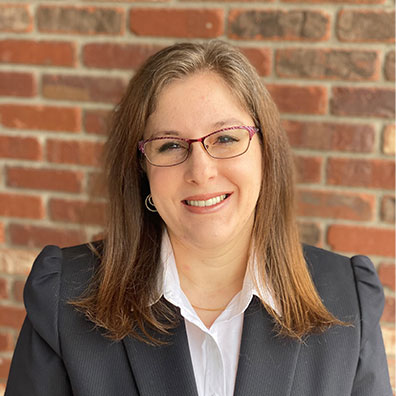
Dr. Jennifer Daines
University DeanAn Air Force veteran and graduate of the U.S. Air Force Academy, Dr. Jennifer Daines brings more than 25 years of leadership experience spanning military service and higher education. She is dedicated to advancing student success through academic excellence, innovation, and the thoughtful integration of artificial intelligence into teaching and learning.

Dr. Kimberly Derryberry
Lead FacultyDr. Kimberly Derryberry is Lead Faculty for CTU's BS in Organizational Psychology, where she focuses on student success, faculty development, curriculum quality, and preparing learners to apply organizational psychology in today's evolving workplace.
For more faculty profiles please visit our Leadership and Faculty page.
Related Degrees
Compare up to three additional degrees
FAQs
Organizational psychology studies how people behave at work - individually, in groups, and across whole organizations - and applies that understanding to help improve leadership, teamwork, training, hiring, and employee wellbeing. It sits at the intersection of psychology and business, focusing on practical workplace application rather than clinical practice.
The fields overlap substantially, but the titles differ. Working as an "industrial-organizational psychologist" generally requires graduate education and, in some contexts, licensure. CTU's bachelor's program does not lead to licensure or certification. It is designed to help build applied organizational skills for workplace roles and can also serve as groundwork if you later pursue graduate study.
Common career paths may include positions across many industries in management. Coursework in effective communication strategies, leadership, developing talent, and change management help support these functions. Roles and requirements vary by employer.
Yes, this program is designed with working adults in mind. The program is offered fully online, and the coursework centers on situations working students may encounter already - team dynamics, workplace conflict, organizational change, employee motivation, which makes it possible to apply what you're studying while you study it.
A business or HR degree program generally centers on processes, policy, and operations. An organizational psychology degree program starts from human behavior - why people are motivated, how groups make decisions, how organizations respond to change - and applies that understanding to workplace practice. The two are complementary; this program approaches the workplace through the behavioral side.
What Students Are Saying About Their CTU Experience
I chose CTU because it offered a flexible, career-focused curriculum that really aligned with my goals.
Carmen L. 2025 Graduate, Bachelor of Science in Psychology
I chose CTU because it seemed to cater to my life as a working mother and wife. I loved the 5 week sessions set up.
Tiffany C. 2025 Graduate, Bachelor of Science in Psychology


