
Online Bachelor's in Computer Engineering
Bachelor of Science in Computer Engineering
The typical American household contains just over 17 connected devices on average. * CTU’s Bachelor of Science Degree in Computer Engineering is designed to help students work to develop the skills needed for these times of rapid technology adoption. Along with a core curriculum of computer engineering courses including design, development, and testing of equipment ranging from small embedded systems to supercomputers, students can study how to design and build within economic, environmental, social, political, ethical, health and safety, manufacturability, and sustainability constraints.
* *https://www.parksassociates.com/blogs/home-systems-and-controls/the-connected-home-has-entered-its-replacement-era (visited 7/29/2026).
186
Program Credits
5 Weeks
Course Length
Online Colorado Springs
Location
Estimate your costs, potential savings and graduation date.
Bachelor's in Computer Engineering Program Overview
The Bachelor of Science in Computer Engineering degree program is a 186-credit-hour program. The program includes 69 credit hours of general education courses and 117 credit hours devoted to the computer engineering core, which are designed to provide instruction in the design, development, and testing of computer equipment from small embedded systems to supercomputers.
This degree program is designed to help graduates prepare to enter this diverse engineering discipline with a strong technical background as well as analytical, critical-thinking, and problem-solving skills that enable them to excel as professionals contributing to a variety of engineering roles within the various fields of engineering and the high-tech industry. The program emphasizes that graduates of the computer engineering program will be committed to professional development and lifelong learning by engaging in professional or graduate education in order to stay current in their field and achieve continued growth.
This degree program integrates elements of electrical engineering and computer science to prepare students to design and develop computer hardware and software in computer-based embedded systems or devices.
This program does not lead to additional licensure or certification. As such, CTU has made no determination regarding prerequisites for licensure or certification in any state or jurisdiction.
Through innovative, industry-relevant curricula and technology-enabled, student-centered teaching, the College of Computer Science, Engineering, and Technology empowers a diverse student population to become motivated, creative, ethical, and skillful professionals. By fostering AI literacy and developing AI competency alongside core experience in Computer Science, Computer/Electrical Engineering, and Information Technology, the College helps students prepare to address complex challenges in the digital economy and achieve their personal and professional goals.
For the 9th consecutive year, CTU's Online Bachelor's degree programs are ranked among the Best Online by U.S. News & World Report.*
* CTU programs are ranked among U.S. News & World Report’s 2023 Best Online Programs.


Bachelor of Science in Computer Engineering Enrollment and Graduation Data

Estimate your costs, potential savings and graduation date
Get an estimate of your degree program costs and graduation date in as little as five minutes.
Computer Engineering Courses
| Courses: General Education | Credits | |
|---|---|---|
| CHE105 | Introduction to Chemistry | 5 |
| COMS105 | Interpersonal Communications | 4.5 |
| ECON210 | Principles of Macroeconomics | 4.5 |
| ENGL104 | Introductory Written Communication | 4.5 |
| ENGL105 | Professional Written Communications | 4.5 |
| HIST120 | Intro to American History: 1950 to the Present | 4.5 |
| MATH117 | Precalculus | 4 |
| MATH205 | Differential Calculus | 5 |
| MATH207 | Integral Calculus | 5 |
| MATH212 | Fundamentals of Discrete Mathematics | 4 |
| PHIL101 | Introduction to Ethics | 4.5 |
| PHY211 | Physics I - Mechanics | 5 |
| PHY212 | Physics II – Heat, Light and Sound | 5 |
| PSYC102 | Introductory Psychology | 4.5 |
| or | ||
| SOCL102 | Introductory Sociology | 4.5 |
| UNIV104 | Academic and Career Success | 4.5 |
| or | ||
| HUMNELE | Humanities Elective | 4.5 |
| Total Credit Hours: | 69 | |
| Courses: Core | Credits | |
|---|---|---|
| CE250 | Computer Architecture | 4 |
| CS119 | Introduction of Programming | 4 |
| CS219 | Python Programming | 4 |
| CS227 | Linux Programming | 4 |
| CS228 | C++ Programming | 4 |
| CS233 | Fundamentals of Data Structures | 4 |
| CS267 | Computer Algorithms | 4 |
| CS337 | Introduction to Parallel Computing | 4 |
| CS341 | Principles of Operating Systems | 4 |
| CS374 | Fundamentals of Software Design | 4 |
| CSS150 | Introduction to Computer Security | 4 |
| CSS200 | Principles of Network Security | 4 |
| EE110 | Introduction to Engineering | 4 |
| EE221 | Circuit Analysis I | 5 |
| EE252 | Digital Design I | 5 |
| EE312 | Embedded Microcontrollers | 5 |
| EE331 | Circuit Analysis II | 5 |
| EE352 | Digital Design II | 5 |
| EE375 | Electronic Design I | 5 |
| EE486 | Impact of Global Issues on Design | 2 |
| EE490 | Product Design I | 4 |
| EE491 | Product Design II | 4 |
| IT204 | Fundamentals of Networking | 4 |
| MATH302 | Differential Equations | 5 |
| MATH304 | Linear Algebra | 4 |
| MATH312 | Principles of Probability and Statistics | 4 |
| PJM210 | Project Management Tools | 4 |
| Select 4 credits of courses related to computer engineering | 4 | |
| Total Credit Hours: | 117 | |
Total Credit Hours: 186
View More
View Less
Learning Outcomes
BSCE Program Learning Outcomes (called Student Outcomes by ABET):
- An ability to identify, formulate, and solve complex engineering problems by applying principles of engineering, science, and mathematics
- An ability to apply engineering design to produce solutions that meet specified needs with consideration of public health, safety, and welfare, as well as global, cultural, social, environmental, and economic factors
- An ability to communicate effectively with a range of audiences
- An ability to recognize ethical and professional responsibilities in engineering situations and make informed judgments, which must consider the impact of engineering solutions in global, economic, environmental, and societal contexts
- An ability to function effectively on a team whose members together provide leadership, create a collaborative and inclusive environment, establish goals, plan tasks, and meet objectives
- An ability to develop and conduct appropriate experimentation, analyze and interpret data, and use engineering judgment to draw conclusions
- An ability to acquire and apply new knowledge as needed, using appropriate learning strategies.
BSCE Program Educational Objectives:
The program educational objectives of the BSCE program are to produce graduates who, after acquiring industry experience:
- Are competent Computer Engineers who value system-level perspectives; provide technical expertise; engage in continuous learning and advanced education; apply theory, experimentation, and modern engineering tools; and validate systems and solutions.
- Lead the computer engineering industry in their companies and society by serving as mentors, fostering effective teams, and identifying critical needs and concerns as the future evolves.
- Demonstrate ethical and responsible citizenship of a diverse global society.
Faculty
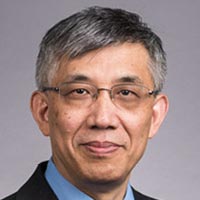
Dr. Yanzhen Qu
University DeanDr. Yanzhen Qu is the University Dean and Professor at the College of Computer Science, Engineering and Technology at Colorado Technical University (CTU). During his tenure at CTU, Dr. Qu has taken a leadership role in modernizing the curricula of CTU’s CS, IT and Cybersecurity degree programs, ranging from Associate to Doctoral levels.

Dr. Richard Cai
Executive Program DirectorDr. Richard Cai is CTU’s Executive Program Director for the College of Computer Science, Engineering & Technology. In this role, Dr. Cai supervises curriculum design, development and revision for the degree programs offered in the college. He also plays a key role in the program assessment and accreditation.
For more faculty profiles please visit our Leadership and Faculty page.
For more information visit the College of Engineering & Computer Science.
Admission Requirements
BSCE Foundation Requirements
The Bachelor of Science in Computer Engineering (BSCE) is built upon the expectation that students will enter the program with a solid background in mathematics. Therefore, the BSCE program requires students to have prior foundational knowledge in college-level math to be successful.
Students entering into the BSCE program will be required to successfully complete two BSCE foundation courses (MATH095 and MATH096) to measure mathematic proficiency in the following areas: Analytic College Algebra – Engineering and Analytic Trigonometry - Engineering. These foundations courses are only available for students enrolled in BSCE and BSEE programs.
If a student can show evidence of satisfying the foundation course objectives through coursework from an accredited institution, the foundation requirement can be waived.
The BSCE foundation course MATH095 must be completed and passed prior to beginning courses in the BSCE program. Students will need to complete and pass MATH096 prior to the end of the first quarter.
Students must be able to exhibit proficiency by successfully completing the foundation course with a minimum 70% passing score. If after 5 attempts (applies to each course separately) students do not pass the foundation course, students are encouraged to work with the Student Success department if they have questions regarding these foundation courses, timeframes for completion, or for alternative programs of study as needed.
Students who do not meet the BSCE foundation requirements will be withdrawn, canceled or transferred from the BSCE program to other programs such as BSCS or BSIT.
Accreditations and Alignments
The BSCE program, offered at the CTU Colorado Springs campus and the Virtual Campus, is accredited by the Engineering Accreditation Commission of ABET, https://www.abet.org, under the commission's General Criteria and Program Criteria for Computer Engineering.
Related Degrees
Compare up to three additional degrees
FAQs
What Students Are Saying About Their CTU Experience
Thanks to obtaining my bachelor's degree, I have already obtained a new position within my company.
Michael T. 2023 Graduate, Bachelor of Science in Computer Science
CTU curriculum is set up in a way that makes everything easy to manage.
Robert M. 2023 Graduate, Bachelor of Science in Computer Science
CTU was a great choice for me, who was looking for career-focused education that is flexible and tailored to my needs.
Caleb N. 2023 Graduate, Bachelor of Science in Computer Science


